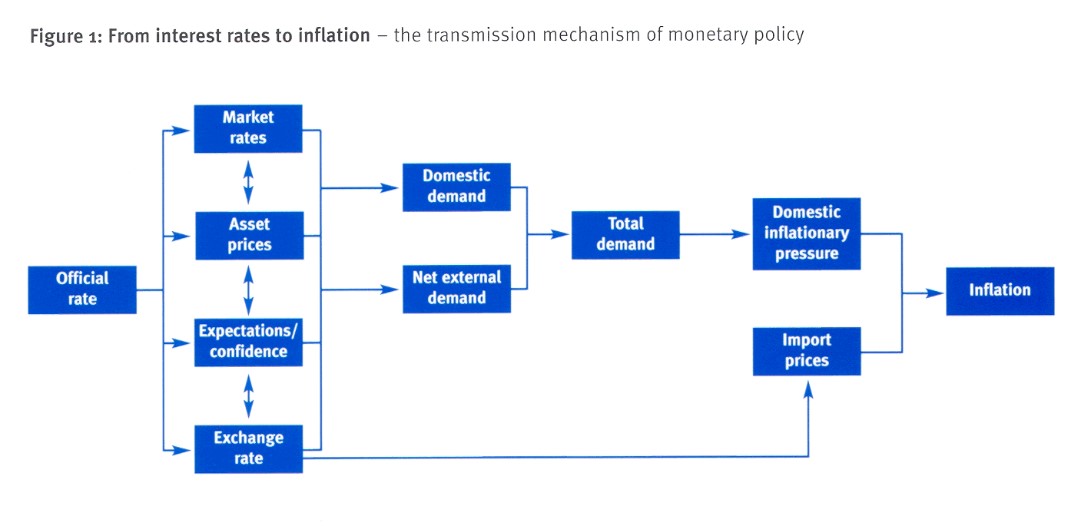
Transmission Mechanism of Monetary Policy
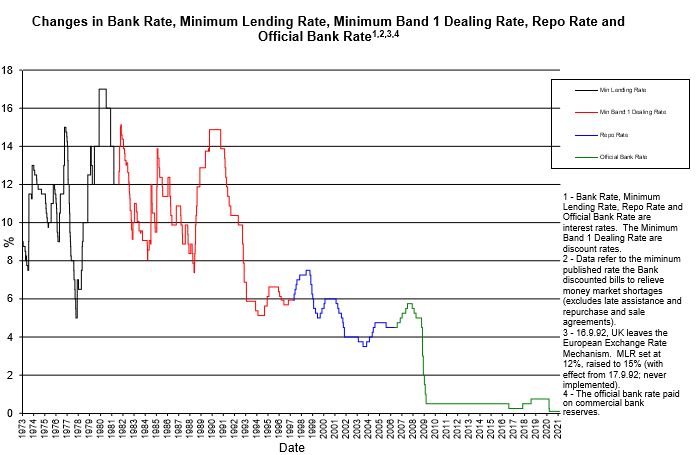
Monetary policy is the process by which the Bank of England sets the interest rate – and sometimes carries out other measures – in order to reach a target rate of inflation.
The target rate of inflation is 2.0%, measured by Consumer Prices Index. This a symmetric target because it should neither be too high or too low of this target rate (+/- 1.0%).
The Monetary Policy Committee of the Bank of England meets eight times per year to set the official bank rate.
The way the bank rate affects the economy is known as the transmission mechanism of monetary policy. It is useful to know this so that you can really expand on your analysis of monetary policy.
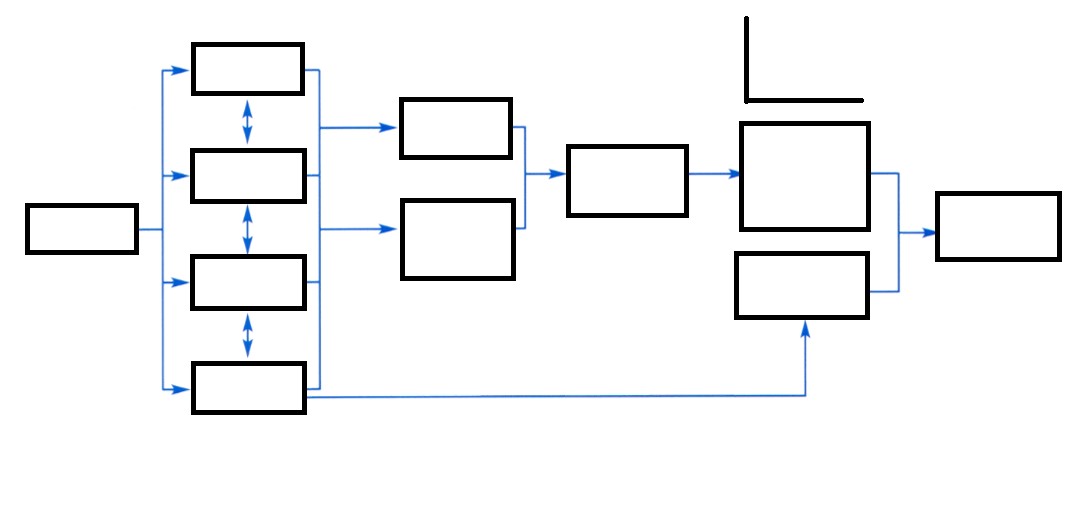
Fill in the above diagam with the following items:
- Interest rates rise
- Market rates rise
- Asset prices fall
- Expectations/Confidence Falls
- Exchange rate rises
- Domestic demand falls
- Net external demand falls
- Total demand falls
- Domestic inflationary pressure falls
- Import prices fall
- Inflation falls
Explanation
Next, explain the links in the diagram by answering these questions:
If the Bank of England lowers its official rate . . .
- What happens to market rates? Why?
- What happens to asset prices? Why?
- What happens to expectations/confidence? Why?
- What happens to the exchange rate? Why?
As a result of these changes:
- What happens to domestic demand (C+I)?
- What happens to net external demand (X-M)?
- What happens to total demand and domestic inflationary pressure?
- As a result of higher exchange rate, what happens to import prices?
- Draw an AS/AD diagram to show the effects of these changes, and how it has meant that inflation will go up.